Have you ever thought about how ready you are to keep sensitive info safe in a world full of cyber threats? In today’s digital world, learning about cybersecurity is key, especially for those in tech. With cyber-attacks getting smarter, knowing the basics of security is more important than ever.
This article explores the Cybersecurity Fundamentals Course for those in tech. It’s made to give a deep understanding of cybersecurity training. It’s perfect for both newbies and those looking to improve their skills. You’ll learn about many important topics that are crucial for a career in cybersecurity. Get ready to learn the essential knowledge to handle cybersecurity challenges with confidence.
Introduction to Cybersecurity Fundamentals
The introduction to cybersecurity is key to understanding our digital world. With so many data breaches and cyber-attacks, knowing cybersecurity basics is a must for tech pros. As threats grow, learning about cybersecurity is essential to keep information safe.
Companies face many dangers, like phishing and ransomware. These threats harm data and a company’s reputation. Having strong cybersecurity knowledge helps professionals tackle these issues. It teaches them to protect assets and handle crises.
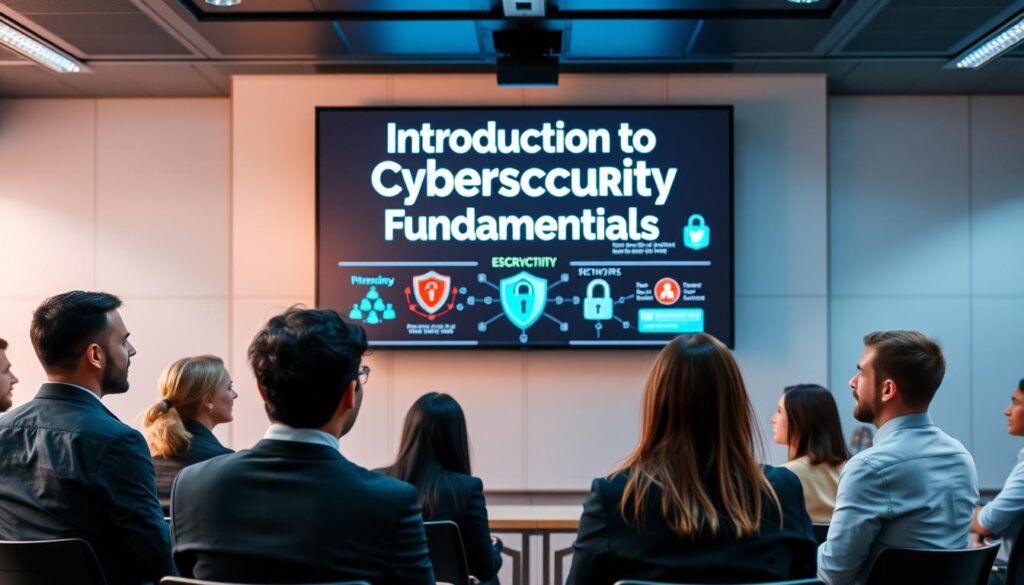
There’s a big need for skilled cybersecurity workers. Starting your education in this field can lead to many career paths. It’s vital to learn the basics of cybersecurity to build a strong defense.
Importance of Cybersecurity in Today’s Digital Landscape
The number of digital threats is growing fast. This shows how crucial good cybersecurity is for all industries. Hackers and bad actors are always trying to get into systems and steal data. Cybersecurity is the main defense against these attacks.
Having strong cybersecurity is key to keeping company data safe and earning customer trust. When people worry about their data, they expect companies to protect it. Companies that don’t focus on security might lose trust, face legal issues, and suffer financially.

Teaching employees about cybersecurity helps them spot and stop threats. Knowing how to handle risks is important for a company’s safety. Companies that train well can keep up with new threats and stay safe in our connected world.
| Cybersecurity Threats | Potential Impacts | Preventive Measures |
|---|---|---|
| Phishing Attacks | Data breaches and loss of sensitive information | Employee training on recognizing phishing attempts |
| Ransomware | Financial loss due to extortion | Regular data backups and software updates |
| Malware | System downtime and data corruption | Use of antivirus software and firewalls |
| Insider Threats | Loss of confidential data or intellectual property | Access controls and monitoring systems |
In short, knowing how important cybersecurity is today is key for businesses to succeed. By focusing on cybersecurity and teaching employees, companies can fight off the constant threats in our digital world.
Understanding the Cybersecurity Fundamentals Course
The Cybersecurity Fundamentals Course is for those who want to grow their skills in cybersecurity. It’s designed for all levels, so everyone can learn. You’ll get a deep understanding of key concepts and how to apply them in real life.
The course aims to give you a strong base in cybersecurity. It’s structured to help you learn step by step. Each part builds on the last, giving you a detailed look at important topics.
It uses different teaching methods like interactive lectures and hands-on labs. This mix helps you learn both theory and practical skills. You’ll be ready to face cybersecurity challenges.
The course also focuses on real-world applications. This way, you learn not just theory but also how to apply it. You’ll be prepared for industry-recognized certifications, boosting your career.
Course Overview and Structure
The cybersecurity fundamentals course has a detailed course structure. It’s designed to give students both practical skills and important knowledge. This knowledge is key for success in the cybersecurity world. Each part of the course is made to make learning fun and engaging.
The cybersecurity syllabus covers important topics like network security, threat management, and data protection. These topics are broken down into different course modules. Each module focuses on a specific part of cybersecurity. This way, students can learn in a step-by-step manner.
Students get to practice with real tools and techniques through hands-on exercises and simulations. This mix of theory and practice helps students learn and apply what they know. They become ready to face security challenges in today’s digital world.
Key Topics Covered in the Course
The cybersecurity fundamentals course teaches you about important concepts. It helps you understand how to manage risks and protect data. You’ll learn about the basics of cybersecurity that keep information systems safe.
Fundamentals of Cybersecurity Principles
Knowing cybersecurity basics is key for any professional. This part of the course covers essential topics like:
- Authentication and access control mechanisms
- Encryption techniques for safeguarding data
- Network security protocols and defenses
- Security policies and compliance requirements
Learning these basics helps you build strong defenses against cyber threats.
Risk Management and Data Protection
Managing risks is vital in cybersecurity. This section teaches you how to spot vulnerabilities and fix them. It includes:
- Identifying potential risks and impacts
- Developing risk mitigation strategies
- Implementing data protection measures to ensure confidentiality, integrity, and availability
- Continuously monitoring and updating security practices
By learning about risk management and data protection, you’ll know how to protect your organization’s assets. You’ll also understand the digital world better.
Target Audience for the Cybersecurity Fundamentals Course
The Cybersecurity Fundamentals Course is for a wide range of learners. It’s perfect for those starting a career or looking to grow in the digital world. It’s also great for students of cybersecurity who want a solid base in key concepts.
It’s also good for tech professionals wanting to learn more. You don’t need any technical background to start. This makes it easy for beginners to learn the basics of cybersecurity.
This course is flexible, meeting the needs of many learners. It’s great for both newbies and those wanting to improve their skills in cybersecurity.
Prerequisites for Enrolling in the Course
To join the Cybersecurity Fundamentals Course, you need to meet a few key requirements. These are set to make sure you can dive into the course material fully. Even though the course welcomes beginners, having some cybersecurity background can really help.
Important enrollment requirements include knowing a bit about technology. You should understand computer systems, networking, and security basics. Knowing how to use Windows and Linux can also be helpful.
The course is designed to give you the skills for cybersecurity jobs. So, while you don’t need any special qualifications, being eager to learn is crucial. Plus, meeting the course prerequisites is essential for success.
Course Objectives and Learning Outcomes
The Cybersecurity Fundamentals course aims to give participants key skills and knowledge. It combines theory and practice for a full learning experience. The course focuses on hands-on labs for real-world learning, helping students apply what they’ve learned.
These labs make learning interactive and prepare students for cybersecurity challenges. They help deepen understanding and build confidence in facing threats.
Hands-on Labs and Practical Experience
Hands-on labs are key to the course’s success. They offer practical experience that boosts learning. Students work on security tasks, from setting up networks to finding vulnerabilities.
This hands-on approach makes theoretical knowledge more concrete. It ensures students are ready to tackle cybersecurity threats.
Certification Preparation
The course also prepares students for certifications. It includes study sessions and practice tests for exams. This focus on certification boosts learning and opens up career doors in cybersecurity.
How to Enroll in the Cybersecurity Fundamentals Course
The process to sign up for the Cybersecurity Fundamentals Course is easy. First, visit the official website of the school offering the course. There, you’ll find clear steps on how to register.
Once you find the course, you need to fill out the application. Make sure to give all the needed information correctly. This includes your personal details, education history, and any tech experience you have.
You might need to submit documents as part of your application. These often include proof of your education, ID, and a personal statement about why you’re interested in cybersecurity. Missing any documents can hold up your enrollment, so check the list carefully.
Also, watch out for deadlines for applying. Schools usually have specific dates for applications. Knowing these dates helps you apply on time.
While going through the sign-up process, remember that help is available. If you have questions or need help with your application, don’t hesitate to ask.
Cost and Financial Aid Opportunities
Knowing the cost of the Cybersecurity Fundamentals course is key to planning. Tuition fees differ by school and program. It’s best to ask your chosen school for the latest prices.
There are also different ways to pay for your course. Schools often have plans that let you pay over time. This makes it easier to handle the cost of your education.
If you’re worried about money, there are ways to get help. Many schools offer grants and scholarships for tech students. These can make your course more affordable.
Current workers might also get help from their employers. Check with your HR department to see if they offer tuition help.
| Type of Financial Aid | Description | Eligibility |
|---|---|---|
| Federal Grants | Need-based funds that do not require repayment. | Eligibility is based on financial need as determined by the FAFSA. |
| Scholarships | Funds awarded based on merit or specific criteria. | Varies by scholarship; may require essays, interviews, or other documentation. |
| Work-Study Programs | Job opportunities that help students pay for their education. | Eligibility determined by financial need; must apply through FAFSA. |
| Employer Tuition Assistance | Reimbursement for tuition costs by employers. | Typically available to current employees; varies by company policy. |
Preparing for the Final Exam
Getting ready for your cybersecurity course’s final exam is key to success. Knowing the exam’s format and what it requires is crucial. This helps you grow your skills and knowledge in cybersecurity. The Exam Candidate Guide is a detailed resource that covers everything you need to know for the exam.
This guide helps you understand the rules for registering and how to prepare well. It turns your anxiety into confidence as you get ready for the exam.
Exam Candidate Guide Overview
The Exam Candidate Guide is packed with important information to boost your exam prep. It talks about registration, timelines, and how scores are calculated. It’s important for every candidate to get to know this guide well.
It shares tips on how to study, practice exams, and where to find helpful resources. These tips can help you succeed in the exam.
Rescheduling and Policies
Knowing the rescheduling policies is important for handling unexpected issues that might affect your exam date. These policies let you make changes when needed, keeping the exam process flexible. By understanding these options, you can reduce stress and keep your exam schedule on track.
Career Advancement through Cybersecurity Education
Cybersecurity education is key for moving up in the tech world. Those who finish a cybersecurity basics course have a good chance at finding jobs. With more companies focusing on keeping their digital stuff safe, the need for cybersecurity pros is growing.
Learning about cybersecurity makes you stand out in a crowded job market. Employers want people who know the basics, how to manage risks, and how to protect data. This knowledge helps them solve real problems.
Also, finishing a cybersecurity course can help you get promoted or move into new roles. Many bosses see education as a way to improve their team and spark new ideas. With the right training, you might become a security analyst or a compliance officer.
In short, spending time on cybersecurity education can lead to many job chances and help you grow in your career. It’s a smart move in the fast-changing tech world.
Testimonials and Success Stories
Student testimonials offer a glimpse into the life-changing impact of the Cybersecurity Fundamentals Course. Past students share how the course’s curriculum and hands-on labs gave them crucial skills. This boosted their confidence in the cybersecurity world.
These stories highlight the course’s success in preparing students for their future careers. It shows how well the course works in real-world scenarios.
Many alumni have moved into cybersecurity roles right after finishing the course. Their stories are not just about personal achievements. They also show the course’s focus on practical, up-to-date knowledge that meets industry needs.
Each testimonial highlights the program’s effectiveness. It motivates future students to join the cybersecurity field. It shows the course’s power to change lives and careers.
Comparative Analysis: Online vs. In-Person Cybersecurity Courses
More people are looking into cybersecurity careers. They face a choice between online and in-person training. Each has its own benefits, fitting different learning styles and schedules.
Online courses offer great flexibility. Students can learn at their own pace and schedule. They include interactive features like forums and video lectures, making learning fun.
In-person training, however, provides a structured setting. It allows for direct interaction with teachers and classmates. This hands-on approach is perfect for those who enjoy face-to-face learning and networking.
| Feature | Online Courses | In-Person Training |
|---|---|---|
| Flexibility | High; self-paced learning | Fixed schedule; set class times |
| Accessibility | Available from anywhere with internet | Location-dependent; requires travel |
| Interaction | Virtual discussions and forums | Direct engagement with instructors and peers |
| Cost | Tends to be lower; no commuting | Higher; includes materials and facility fees |
| Learning Style | Self-directed; suits independent learners | Structured; benefits those who prefer direct supervision |
The right choice depends on your learning style and goals. If you prefer a structured setting, in-person training might be better. Online courses are great for those who value flexibility. Choosing wisely can help you achieve your career dreams.
Cybersecurity Training Resources and Supporting Materials
Students in the Cybersecurity Fundamentals course get a lot of help. They have many resources to learn from. These include textbooks that teach the basics of cybersecurity.
Online tutorials make learning fun and flexible. Students can learn at their own speed. These tutorials help explain tough ideas with pictures and videos.
There are also videos and webinars to learn from. Experts share their knowledge in these. They help make the course material clearer.
| Resource Type | Description | Examples |
|---|---|---|
| Cybersecurity Textbooks | Comprehensive guides covering core topics in cybersecurity. | “Cybersecurity Essentials,” “Network Security Fundamentals” |
| Online Tutorials | Interactive lessons and exercises focusing on specific skills. | Codecademy, Cybrary |
| Webinars | Live sessions featuring industry leaders discussing current trends. | Industry-specific webinars offered by organizations like ISC² |
| Videos | Visual explanations of complex concepts in cybersecurity. | YouTube channels like Computerphile |
Together, these resources create a great learning space. They prepare students for a career in cybersecurity.
Future Trends in Cybersecurity Education
The world of cybersecurity education is always changing. New threats pop up, and schools and training programs must keep up. They need to get ready the next wave of cybersecurity experts. The future of cybersecurity education will focus on practical skills and theory.
Artificial intelligence is becoming a big part of cybersecurity education. Schools are using AI tools to make learning better and more real. This helps students learn about weaknesses and how to fix them.
Online learning is also on the rise. It lets people learn at their own speed. This is good for all kinds of learners, including those who work and want to learn more. It helps meet the need for constant learning in cybersecurity.
Hands-on labs and simulations are now key in cybersecurity classes. They let students practice what they learn. This hands-on approach is key to getting ready for the complex world of cybersecurity.
| Training Trend | Description | Impact on Education |
|---|---|---|
| AI Integration | Utilizing AI tools for enhanced learning experiences and simulations. | Improves understanding of vulnerabilities and threat management. |
| Online Learning | Flexible, self-paced online courses for a variety of learners. | Increases accessibility and encourages continuous education. |
| Hands-on Labs | Practical labs to simulate real-world cybersecurity scenarios. | Equips students with essential problem-solving skills. |
These trends look good for the future of cybersecurity education. By focusing on adapting to new challenges, today’s students will be ready to protect our digital world tomorrow.
Conclusion
The Cybersecurity Fundamentals Course is key for those starting in tech. It’s vital to learn the basics of cybersecurity. This knowledge helps protect sensitive info and prepares you for new threats.
Learning about risk management and data protection is crucial. It’s a big step in your career. This course gives you the skills and knowledge needed for today’s tech world.
Getting into cybersecurity education is a smart move. It opens doors to new career opportunities. By investing in this training, you grow your career and help keep our digital world safe.